Text: Jana Haver
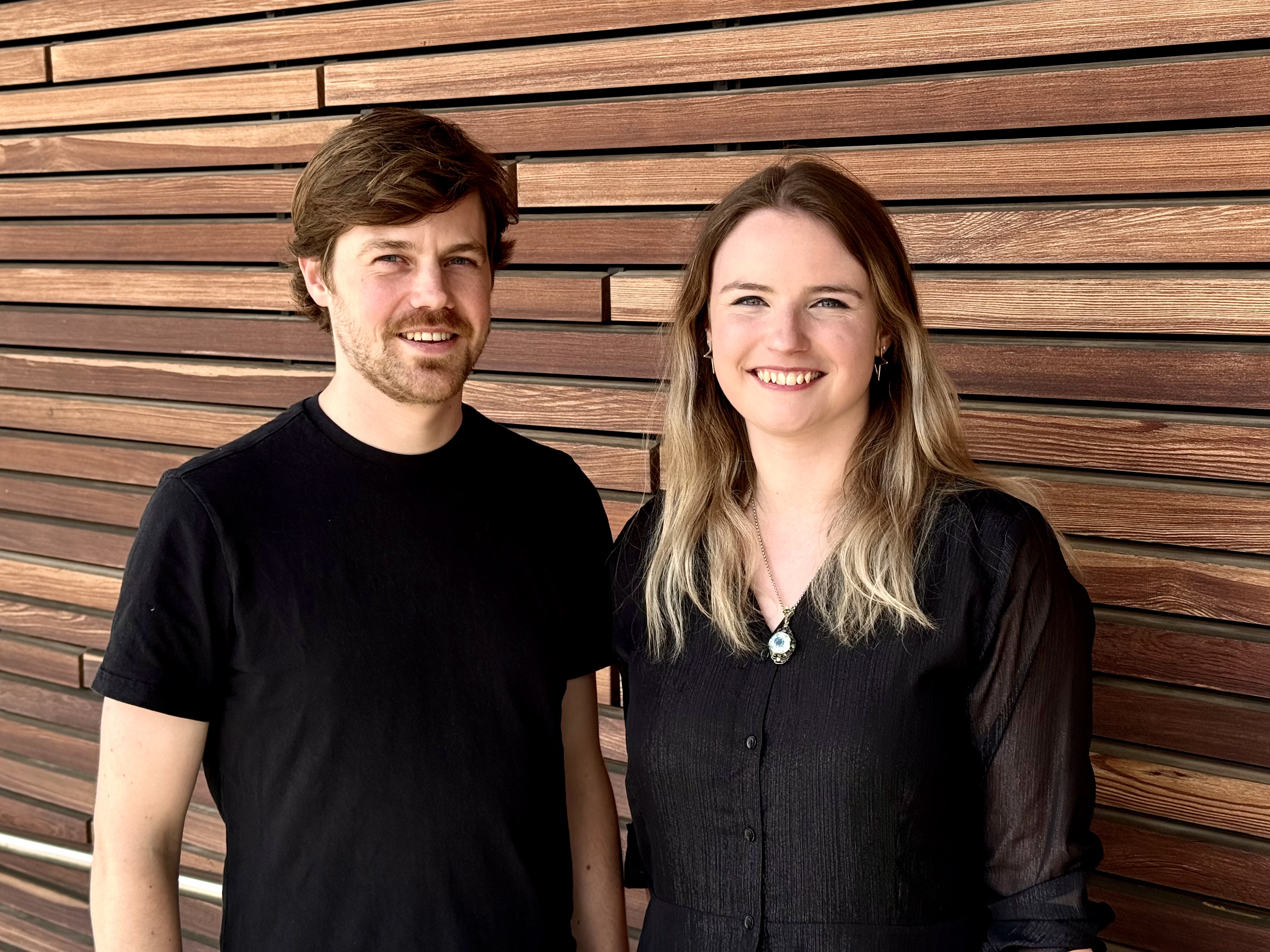
All early-career researchers of TRR 318 are automatically members of the Research Training Group (RTG). In this interview, psycholinguist Josephine Fisher and computer scientist Roel Visser talk about their experiences pursuing a PhD within the interdisciplinary projects of the Transregio, as well as about the mentoring provided by the RTG.
You are both doctoral researchers at TRR 318, although you work in completely different disciplines and on different projects. Which are they?
Josephine Fisher:
I am on project A01, which is called “Adaptive Explanation Generation”. We have researchers from linguistics like me, as well as from psychology and computer science. When people explain something, they usually incorporate the reactions of their conversation partners and adapt their explanations accordingly. We observe how people react towards each other during game explanations, and then we take this information and implement it into an explainable agent. My doctoral thesis is part of this project: my aim is to examine how explainees are involved into an explanation, a topic known as interactive adaptivity.
Roel Visser:
I am part of project C01, which is called “Healthy distrust in explanations”. The project is a collaboration between the machine learning group in Bielefeld and the psychology group in Paderborn. We examine the interface between the people who use these systems and the systems themselves. The idea behind the project is that current machine learning and AI systems can be incorrect or produce errors, but they are still highly useful. Ideally, people are willing to use these systems, but do not put blind trust in them. If Netflix recommends the wrong movie to you, it doesn’t really matter that much. But if you are doing anything with self-driving cars or finance, this becomes more important. One aim of the project is to use explanations to enable humans to identify possible discrepancies in AI systems. This should help users to build healthy distrust towards these types of systems, rather than mere disagreement between machines and humans.
Both of you started your doctoraal research at Transregio in October 2021. Why did you want to join the doctoral program at TRR 318?
Roel Visser:
I did my Bachelor and Master degrees in computer science in the Netherlands. I started my doctoral studies in Bielefeld in Barbara Hammer’s group. I liked the interdisciplinary aspect of the work. I was interested in these two different perspectives in the project – both the human-centric focus andbe the computational aspect. I think there is a gap in terms of people’s knowledge and expertise, but also in the available data. There is also a huge gap between the people designing these systems and people using them.
Josephine Fisher:
I did my both my Bachelor and Master degrees at Paderborn University. I did a double major in English linguistics and English literature and cultural studies. When TRR launched, I was still working on my Master’s thesis. I really liked working as a research assistant and analysing data and conducting studies. And I’ve also really enjoyed psycholinguistics as a specialization within linguistics. The main reason for me to join was that I could do full-time research and a lot of data analysis.
How how have you enjoyed doing your doctorate in this Transregio so far?
Josephine Fisher:
I like working in an interdisciplinary team. Mine includes two other disciplines: psychology and computer linguistics. But you need all these different components. It helps to find your own position by thinking from different angles and perspectives. For example, when we were doing our data collection, everybody wanted something else from the studies. We had to implement another questionnaire for the psychology group. The computer linguists needed the data structured in a different way. So, you really had to think about how to get everything that everyone involved needed, thus broadening your own horizon.
What experiences have you had during your research assignments in Transregio projects? What challenges does working in an interdisciplinary team entail?
Roel Visser:
Yes, sometimes different disciplines can get quite stuck into their own silo, also in linguistical terms. Then you need to keep re-evaluating, and make sure that you are all talking about the same thing and ultimately thinking about things from a common ground. It can be a benefit for everyone to have their own perspective, but if you are doing the work together, it has to be coordinated. You have to keep making sure that everyone is still on the same page.
Josephine Fisher:
And you must negotiate the terms of the conversation. It is also essential to have a positive mindset and appreciate the other disciplines. It is always important to discuss the hot topics and agree on the terms with each other, because the same terms are sometimes used in completely different ways in different disciplines. You learn a lot when you bring together these different disciplines.
You are involved in different projects, but you know each other from your research training group (RTG) at TRR 318. Which role does this group play for each of you? Which kind of support was offered during your doctoral studies?
Josephine Fisher:
The RTG is a graduate school. They want to support us in our academic careers, and provide concrete steps towards helping us achieve our goals. We started with workshops like: ‘How to write an exposé?’ or ‘How to be a researcher?’. The RTG supported us in many ways. For example, they put on a number of workshops that we could attend, where we also got to know other doctoral researchers. Having all those workshops and the opportunity to do writing retreats together really helped me. Last year I did a research stay for six weeks in Bangor in Wales. The RTG provided us a network that we could connect with.
Roel Visser:
I quite liked getting a bit of support from the workshops. It is also good to have support from outside of your project, beyond your supervisor and direct colleagues. It was interesting to hear the perspectives from other doctoral researchers: to learn about the kinds of problems that they run into with their research, or logistical or communication issues. It can be difficult as the new kid on the block coming into the research project. So, it is quite helpful to get this support to help you hit the ground running.
What is the value of the interdisciplinary network of early career researchers in the RTG?
Josephine Fisher:
Usually, when you start at a new institution, you’re the new person. For us in the RTG, we were all new together. Being in the same boat helped a lot. We were connecting with each other. I probably wouldn’t have met so many different people if I hadn’t been in TRR. I liked talking to all the different people and finding out what their worries are and how their work is going. We were building team spirit. Being a TRR member is now part of who I am in my professional life.
Roel Visser:
During doctoral work, you can get stuck on an island, so to speak, and get really focused on just your own research projects. In addition to this, you can also be on an island within your own research group, even with your professor and the other doctoral researchers in that group. I like how the RTG helps you to get off your own island.
How did you develop on a personal level during your doctoral studies at TRR 318? What’s on the horizon after your doctorate?
Josephine Fisher:
Thinking back to 2021 and comparing myself to today: I gained a lot more confidence as a researcher. I know that there are still a lot of things I need to learn, but you come to understand that this is part of being a researcher. You can’t know everything. I’m also more confident in connecting with people. I learned to put myself out there there and be confident that what you’ve got to say about this topic matters, and that you impact the research community. I also organized the second TRR conference and that was a huge learning experience. In terms of the future, I am hoping that we secure a second funding phase.
Roel Visser:
I enjoyed gaining experience in conducting research, writing papers, and learning a lot about the research process. This helped build confidence for me as well. I also liked getting more and more immersed in the topics, which enables you to gain greater expertise over time. In terms of the future, I am not yet sure of which direction I want to go into. At the moment, I am open towards going into academia or industry.
Note: This article is from the TRR 318 brochure published in summer 2025.