Project WIKO: Questions about explainable technology

In project WIKO, researchers from TRR 318 combine their work on AI explanations with science communication. The aim is to strengthen the exchange between research and society and to sensitize people to the reflective use of AI. The focus is on co-construction workshops, which are developed and conducted by the project team. In these workshops, participants themselves enter into dialogue with AI systems. They actively explore how AI works, where its limits lie, and how explanations need to be designed to be understandable. The approach specifically promotes XAI literacy, i.e., the ability to critically understand and classify explainable AI. Particular attention is paid to groups that have been underrepresented to date. In the long term, the concepts developed are to be transferred to education and training programs in order to strengthen social participation in the use of AI.
Research areas: Media education, Computer science


Support Staff
Sven Carlmeyer, Bielefeld University
Melisa Kökce, Bielefeld University
Celine Wei Lin Liu, Bielefeld University
Former Members
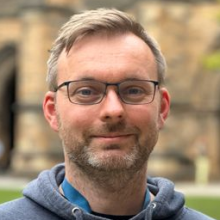
Prof. Dr. Carsten Schulte, Project leader
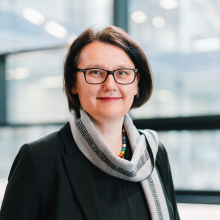
Prof. Dr Ilona Horwath, Project leader
Dr. Kristina Nienhaus, Research associate
Dr. Mara Kastein, Research associate
Dr. Nils Klowait, Research associate
Tim Rittig, Research associate
Michael Lenke, M.Ed., Research associate
Publications
Assessing AI Literacy: A Systematic Review of Questionnaires with Emphasis on Affective, Behavioral, Cognitive, and Ethical Aspects
M. Lenke, N. Klowait, L. Biere, C. Schulte, in: Lecture Notes in Computer Science, Springer Nature Switzerland, Cham, 2025.
The presentation of self in the age of ChatGPT
N. Klowait, M. Erofeeva, Frontiers in Sociology 10 (2025).
Investigating Co-Constructive Behavior of Large Language Models in Explanation Dialogues
L. Fichtel, M. Spliethöver, E. Hüllermeier, P. Jimenez, N. Klowait, S. Kopp, A.-C. Ngonga Ngomo, A. Robrecht, I. Scharlau, L. Terfloth, A.-L. Vollmer, H. Wachsmuth, in: Proceedings of the 26th Annual Meeting of the Special Interest Group on Discourse and Dialogue, Association for Computational Linguistics, Avignon, France, n.d.
“I'm Actually More Interested in AI Than in Computer Science” - 12-Year-Olds Describing Their First Encounter with AI
M. Lenke, L. Lehner, M. Landman, in: 2025 IEEE Global Engineering Education Conference (EDUCON), IEEE, 2025.
Enhancing AI Interaction through Co-Construction: A Multi-Faceted Workshop Framework
M. Lenke, C. Schulte, in: 2025 IEEE Global Engineering Education Conference (EDUCON), IEEE, 2025.
Forms of Understanding for XAI-Explanations
H. Buschmeier, H.M. Buhl, F. Kern, A. Grimminger, H. Beierling, J.B. Fisher, A. Groß, I. Horwath, N. Klowait, S.T. Lazarov, M. Lenke, V. Lohmer, K. Rohlfing, I. Scharlau, A. Singh, L. Terfloth, A.-L. Vollmer, Y. Wang, A. Wilmes, B. Wrede, Cognitive Systems Research 94 (2025).
Investigating Co-Constructive Behavior of Large Language Models in Explanation Dialogues
L. Fichtel, M. Spliethöver, E. Hüllermeier, P. Jimenez, N. Klowait, S. Kopp, A.-C. Ngonga Ngomo, A. Robrecht, I. Scharlau, L. Terfloth, A.-L. Vollmer, H. Wachsmuth, ArXiv:2504.18483 (2025).
Can AI explain AI? Interactive co-construction of explanations among human and artificial agents
N. Klowait, M. Erofeeva, M. Lenke, I. Horwath, H. Buschmeier, Discourse & Communication 18 (2024) 917–930.
On the Multimodal Resolution of a Search Sequence in Virtual Reality
N. Klowait, Human Behavior and Emerging Technologies 2023 (2023) 1–15.
Halting the Decay of Talk
N. Klowait, M. Erofeeva, Social Interaction. Video-Based Studies of Human Sociality 6 (2023).
Show all publications